




On the website of the University of World Civilizations, metadata and headers were tidied up, technical duplicate management was set up, and analytical events were added. In the case, we look at what changes can be tested in HTML and why these results need to be distinguished from traffic growth.
Project website: UWC
Initial task
The large university website contains educational programs, news, information about the organization and information sections. Identical descriptions and multiple H1 headers make the structure difficult to understand, and archives with parameters can create additional addresses.
The work was divided into page metadata, indexing rules, analytics events, and organization markup. Each direction requires its own verification method.
Work and documented results
| Work | Result | Period or source |
|---|---|---|
| Technical SEO | 391 unique descriptions added | University of World Civilizations |
| Analytics and structured data | 4 Metrica goals configured | University of World Civilizations |

Technical SEO
391 unique descriptions added · University of World Civilizations
We fixed duplicate titles on 23 URLs and set H1 headings on 26. Added robots.txt and sitemap.xml and excluded technical duplicates from indexing.
Filled out unique meta descriptions for 391 addresses from the agreed list. It included 386 entries and pages and five news archive terms. The final check showed 391 non-empty and 391 unique descriptions.
We removed duplicate titles on 23 URLs and configured H1 headings on 26. We checked the published HTML to verify both the saved text and the template output.
Added robots.txt and sitemap.xml. Technical duplicates with date parameters were closed from indexing; The sitemap links to WordPress dynamic maps. The rules for duplicates were applied to specific address types.
For the main page, we added university markup and linked it to the visible content. The markup describes the organization; in itself, it does not mean that you will receive a rich result in the search.
Analytics and structured data
4 Metrica goals configured · University of World Civilizations
We connected form submission and admissions link click events. Added structured data for the university and six leaders' profiles.
We configured four Yandex Metrica goals for form submissions and clicks on admission links. These are different visitor actions and need to be distinguished in reports.
We added structured data for six university leaders: Person objects, a shared ItemList and links to the university and page URL. We checked the published JSON-LD for all six people and the fields required by the selected structure.
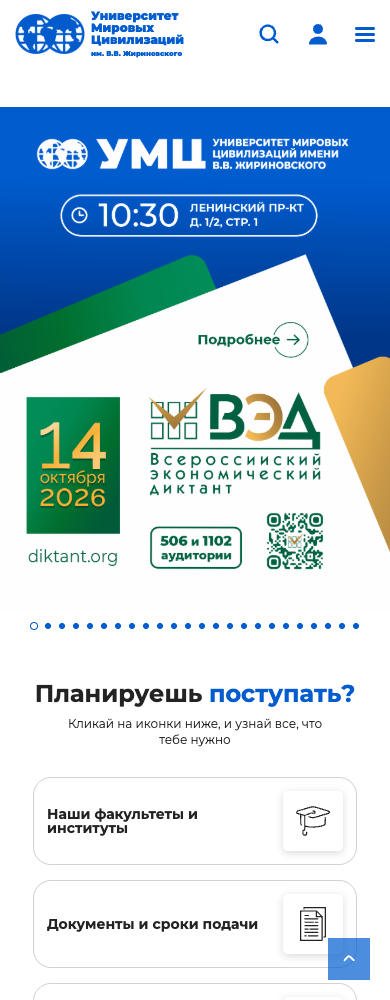
The screenshots show a public website on a computer and phone. Private analytics reports and requests from applicants are not published.
How we verified the result
The main metadata and markup changes were recorded in the working materials for July 2026. The full list of 391 URLs was checked for descriptions, and six valid Person objects were checked for management.
We checked robots.txt, sitemap.xml and technical-duplicate rules separately from page text. While preparing this case study, we reopened the public website and captured its current interface.
Scope of the result
391 descriptions, 23 title corrections and 26 H1 settings – the amount of work performed. These numbers do not describe site rankings, traffic or number of enquiries.
Event tracking provides a basis for measuring visitor actions. This case study does not claim an increase in admissions or establish a causal link to the technical changes.
What to consider for a similar project
On a large information site, it is worth recording a list of addresses and checking the entire agreed volume after a change. Metadata, indexing rules, and analytics events can be conveniently taken as separate results.